

Arrests and deportations of cruise ship crew are continuing at U.S. ports as authorities investigate allegations involving child sexual abuse material. Filipino workers are among those affected in recent Boston cases, including one Norwegian Jewel crew member now facing a federal criminal charge and six Norwegian Breakaway workers processed for removal under immigration law. These cases raise an understandable question: why was one crew member held to face charges while the others were removed?
According to a September 28 announcement from the U.S. Department of Justice, the Norwegian Jewel crew member was arrested on September 27 and charged with transporting child sexual abuse material. He appeared in federal court and was ordered to remain in custody pending an October 1 hearing.
Norwegian Jewel arrived in Boston on September 24, when Customs and Border Protection selected the crew member for additional screening.
Investigators allegedly found child sexual abuse material on two phones. Prosecutors also say one file showed the crew member himself abusing a child. These allegations have not been proven in court, and he is presumed innocent unless proven guilty.
Just days earlier, six Filipino crew members from Norwegian Breakaway went through a different process.
In its September 25 announcement about Operation Tidal Wave, CBP said officers encountered the six workers on September 20. The agency said all six admitted during interviews to previously possessing child sexual exploitation or abuse material.
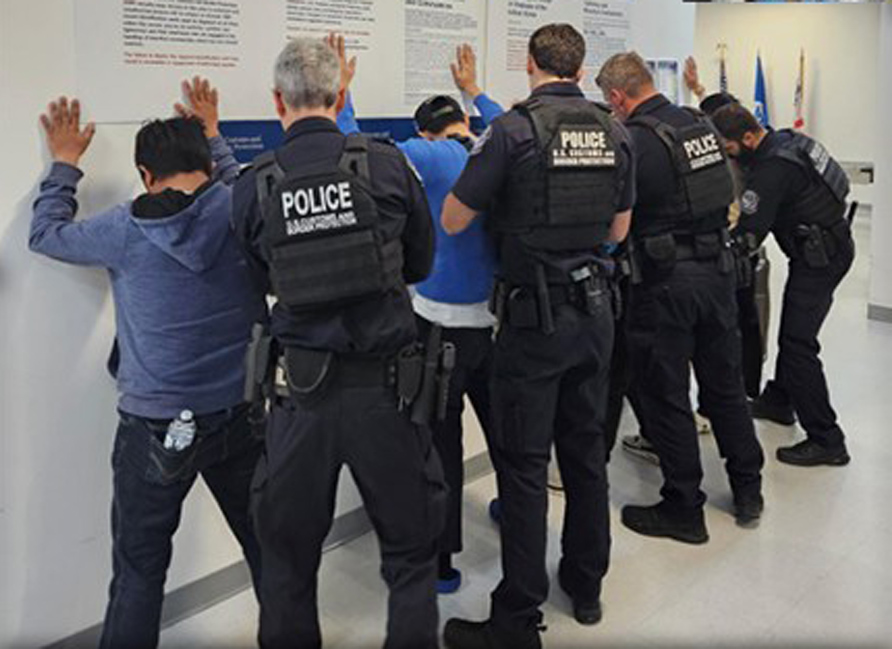
Officers searched their cabins and electronic devices, then processed them for removal under immigration law. The announcement did not identify criminal charges against them.
So what made the Norwegian Jewel case different?
One possible answer is the evidence.
In the Norwegian Jewel case, prosecutors described files allegedly found on the phones, including one they say linked the accused directly to abuse. In the Breakaway cases, CBP described admissions of past possession but did not explain what officers actually found during the searches.
That could be an important difference. But it is a possible explanation, rather than a confirmed answer about why authorities chose different paths.
Being removed from the United States and being prosecuted for a crime are separate processes. Removal is not a criminal conviction. Taking immigration action does not automatically mean prosecutors have the evidence needed to prove a federal criminal charge.
Still, the comparison leaves several questions unanswered.
Were the six Breakaway cases referred to federal prosecutors? Were their phones kept for further examination? Did prosecutors review the evidence and decide against charges, or were the cases never referred to them?
CBP said its Boston operation had led to 87 crew removals since mid-August. The agency also said an earlier phase in San Juan resulted in 14 removals and one case accepted for federal prosecution. Its own announcement shows that these investigations can lead to different outcomes.
What it does not explain is how those decisions were made in the six Breakaway cases.
But for crew watching these developments, the question remains: what makes authorities decide to remove someone, and what makes them decide to hold that person for criminal prosecution?