
The cruise shipbuilding industry has long been one of Europe’s most protected and specialized sectors. For decades, construction of the world’s most complex cruise ships was concentrated in a small group of shipyards led by Fincantieri, alongside Meyer Werft and Chantiers de l’Atlantique.
These yards didn’t just build ships. They built an entire ecosystem of suppliers, designers, engineers, and subcontractors that made Europe the undisputed leader in cruise ship construction. Just how complex cruise shipbuilding is can be seen in the example of Japan’s Mitsubishi Heavy Industries Group, which failed to deliver the cruise ship AIDAprima, resulting in major losses and its withdrawal from large cruise ship construction.
Then came China
Around a decade ago, a strategic partnership was formed between Fincantieri, Carnival Corporation & plc, and China State Shipbuilding Corporation.
The goal at the time seemed logical: to tap into the fast-growing Chinese cruise market, build ships locally for Chinese passengers, and combine Western expertise with Chinese industrial scale. A joint venture was established to build cruise ships in Shanghai using designs and technical support provided by Fincantieri.
But now something significant is happening in China, and it is not getting nearly enough attention.
China is no longer just build cruise ships. It is now moving to control everything that goes into them.
According to Class XH Silk Road the plan is clear. By 2035, Chinese-built cruise ships are expected to rely on over 80 percent domestically produced components, reducing foreign suppliers to a much smaller role. This marks a major shift from today, where much of the technology, engineering systems, and interiors are still sourced from Europe.
From Learning Phase to Control Phase
China did not start this industry from scratch. Companies like Fincantieri helped open the door, bringing expertise into a market that had virtually no cruise shipbuilding experience a decade ago.
That phase now appears to be ending.
What we are seeing is a transition from learning to independence, and not just partial independence but full supply chain control. When you consider that building a cruise ship involves thousands of suppliers, this is not just a shipbuilding story but an industrial strategy on a massive scale.
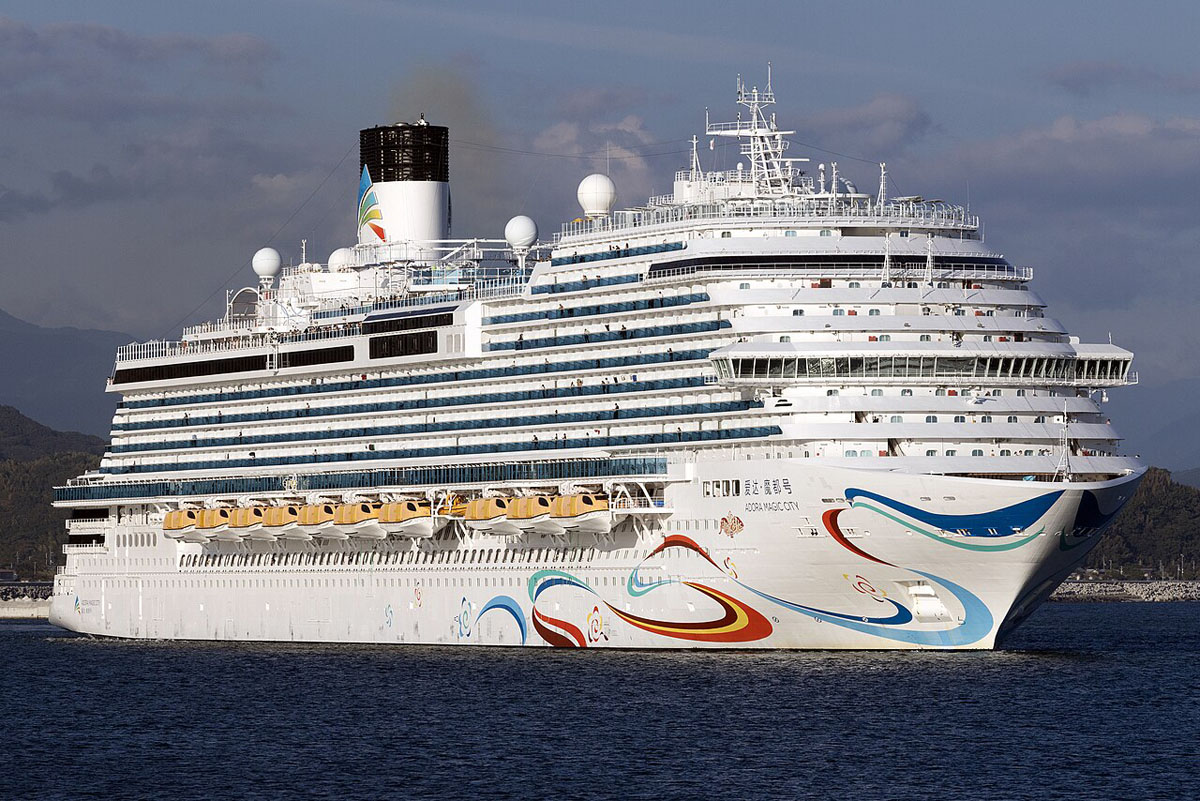
China’s entry into cruise shipbuilding was not organic. It was engineered. The first major result was Adora Magic City a 136,201 gross tonnage vessel with 5,246 passenger capacity, delivered in 2024, marking China’s official entry into large cruise ship construction. This was followed by Adora Flora City, a larger and more advanced vessel, showing rapid improvement in both scale and execution.
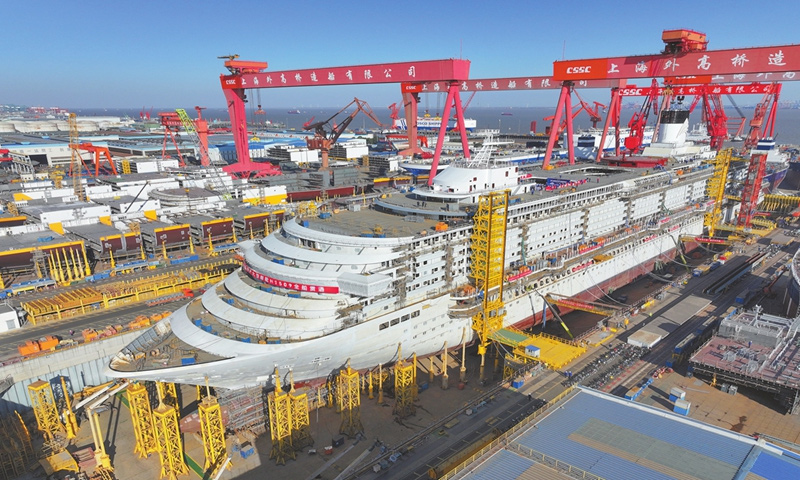
These ships were not designed from scratch but built on platforms developed through cooperation with Carnival and Fincantieri. What followed was rapid acceleration. Construction timelines improved, domestic sourcing increased, technical capabilities expanded, and digitalization together with AI-driven production processes began improving efficiency and reducing build times.
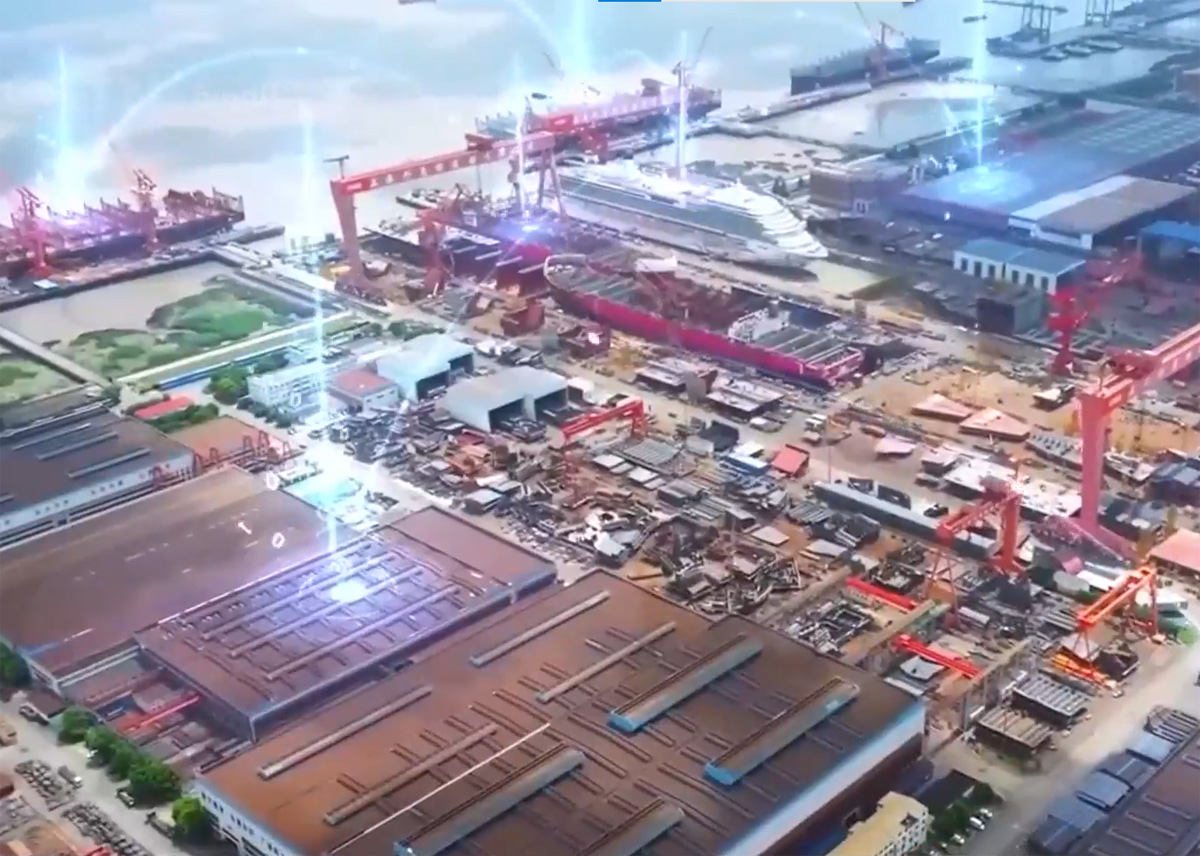
In less than a decade, China moved from having no presence in cruise shipbuilding to constructing some of the most complex vessels in the world.
The 80% Localization Plan
The latest announcement represents a turning point.
China now aims to source over 80 percent of cruise ship components domestically by 2035, moving away from a system that still relies heavily on foreign suppliers. The plan is phased, with expectations of exceeding 50 percent localization by 2030 before reaching the 80 percent target.
This is not just about shipbuilding. It is about replicating and replacing the entire European supply chain.
Did Europe Help Create Its Own Competitor?
This is an uncomfortable question, but one that is becoming harder to ignore. Without European expertise, China’s progress in cruise shipbuilding would likely have taken much longer. The technical knowledge, engineering standards, and project experience were largely introduced through partnerships with companies such as Fincantieri.
At the same time, the market push from Carnival ensured that early projects were commercially viable, creating a real production pipeline rather than isolated developments. What was initially seen as a strategic move to enter a new market has, over time, contributed to something much larger. Knowledge was transferred, capabilities were accelerated, and China was able to scale its cruise shipbuilding capacity far more quickly than expected. Today, the country is steadily moving toward full independence.
What Happens After 2035?
If China reaches its target of 80 percent domestic sourcing, the implications for the global cruise industry could be significant. One of the most immediate outcomes will likely be the availability of more competitively priced cruise ships. China already dominates global shipbuilding in terms of scale and cost efficiency, and once supply chains are localized, production costs are expected to fall further while delivery timelines may shorten and financing becomes more competitive.
This could open the door to lower-cost newbuilds entering the market, allowing new cruise brands to emerge and making fleet expansion more accessible for existing operators. Cruise lines, particularly in the mid-market segment, are likely to consider Chinese shipyards as a viable option for more affordable ships. However, this transition will take time, as operators will continue to evaluate reliability, quality, and long-term performance.
European shipyards focus most probably will remain on high-value and technically demanding vessels, including ultra-large ships and complex designs that require decades of expertise. At the same time, they may begin to lose ground in more price-sensitive segments, particularly in mid-market and volume-driven projects.
The most significant impact may be felt beyond the shipyards themselves. Europe’s strength has always relied on a vast network of suppliers, including Italian interior specialists, German engineering firms, and hundreds of small and medium-sized companies. If China successfully localizes this ecosystem, many of these businesses could face declining demand, weakening the broader industrial base that has supported European leadership for decades.
This is not a sudden disruption but a gradual, long-term shift. Europe remains the leader in cruise shipbuilding today, while China continues to catch up. However, the direction is becoming increasingly clear.
The key question is no longer whether China will compete, but how quickly the industry will begin to feel the impact of that competition.