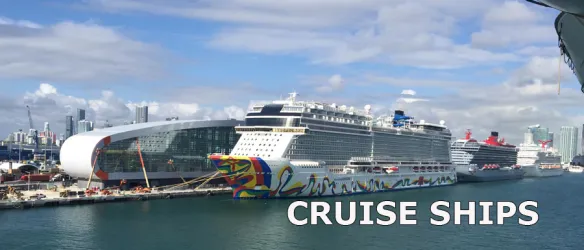

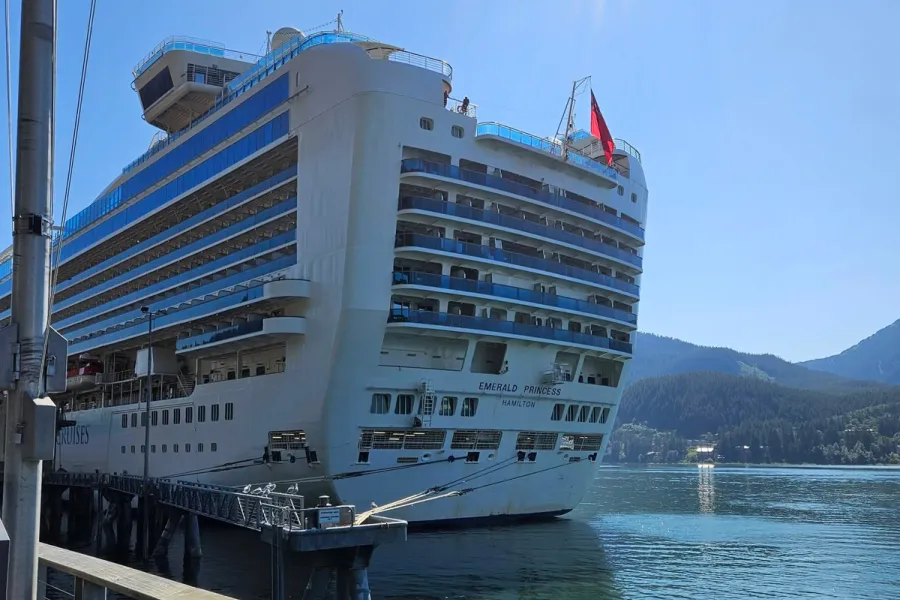
Emerald Princess received a failing draft score of 78 during a U.S. Centers for Disease Control and Prevention sanitation inspection in Long Beach, California, on October 16, 2026. Inspectors documented problems involving food handling, dirty equipment, flies in food areas and moldy produce, including oranges on the crew mess serving line.
The Princess Cruises ship was inspected under the CDC’s Vessel Sanitation Program. Ships must score at least 86 out of 100 to pass.
Emerald Princess lost 22 points in the following categories:
- 5 points: Improper food temperatures and time controls.
- 3 points: Weak food safety management and monitoring.
- 3 points: Cross-contamination and improper food storage.
- 3 points: Dirty food-contact surfaces and utensils.
- 3 points: Pest control failures.
- 2 points: Problems with dishwashing equipment and washing facilities.
- 2 points: Gaps in staff knowledge and response to drinking-water monitoring problems.
- 1 point: Poor condition and cleanliness of floors, walls and ceilings.
Among the main findings, inspectors discovered that almost all cold foods displayed on the portside buffet lines lacked the required colored markers showing when they should be discarded. These included deli meats, cheeses, sandwiches, grilled vegetables, salads and dressings. According to the report, all affected foods were discarded.
Inspectors also identified problems with cooling sandwiches before service. Several trays were covered during cooling, slowing the process. Ham and cheese sandwiches cooled by just three degrees Fahrenheit over three hours, while tomato and mozzarella sandwiches cooled by five degrees over two and a half hours.
At the International Café, mortadella and cheese sandwiches measured above 41°F, and crew gave conflicting accounts of whether they had been prepared that day or the previous day. Inspectors also noted a cooling-log entry in different ink that the chef confirmed he had not reviewed.
Conditions in crew food areas were another concern. Three visibly moldy or rotten oranges were found on the crew mess serving line during lunch. Elsewhere, inspectors found mold on peppers, a cucumber and several previously washed avocados.
The report also described dishwashing equipment with blocked or dirty spray nozzles, along with plates, bowls, pans and other items that remained soiled after cleaning. Black, brown and pink debris had accumulated in several ice-machine water trays.
Food storage practices raised further concerns. Raw pork chops were stored above thawed hot dogs, while partially cooked roast beef was placed above cut boiled eggs. Sushi containing raw tuna was stored above ready-to-eat foods. The pork chops were relocated during the inspection.
Inspectors also recorded a drinking-water monitoring problem following a shipboard blackout that morning. A chlorine analyzer had stopped recording, and an alarm was sounding in the engine control room without the relevant crew being notified. Separate manual tests detected chlorine in the water, so the finding concerned monitoring and communication rather than a confirmed absence of disinfectant.
In their assessment, inspectors linked several significant food safety issues to insufficient managerial controls and gaps in crew knowledge. These included improper cooling, confusion over food time controls, dirty washing equipment, moldy food and incorrect storage.
Some problems were corrected during the visit, including discarding buffet food, cleaning equipment and providing a thermometer to a crew member cooking burgers. The document also instructs the ship to submit a corrective action statement explaining how critical deficiencies will be addressed and prevented from recurring. It does not include a completed corrective action statement or a reinspection result.