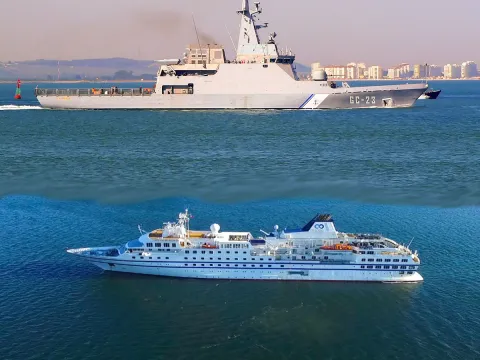

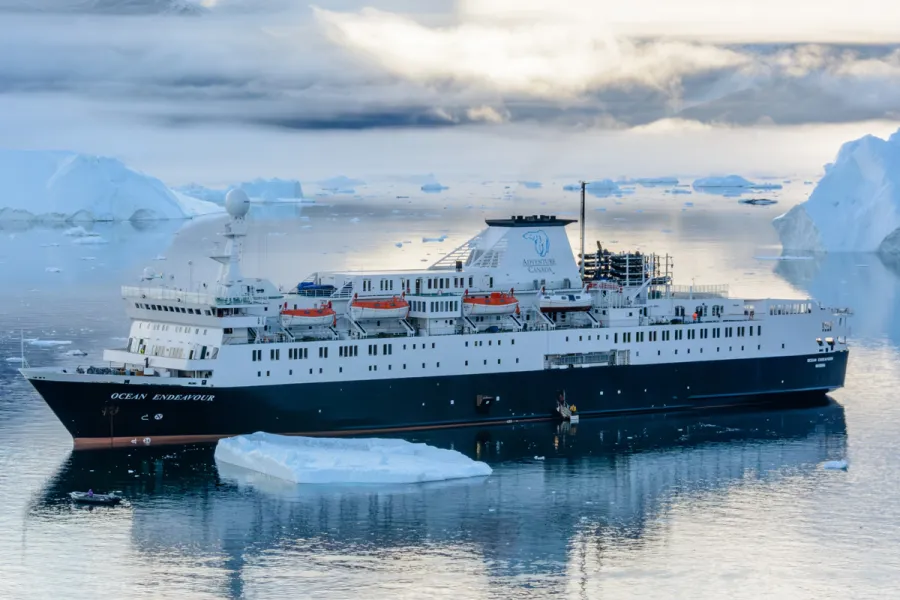
The former expedition cruise ship Ocean Endeavour arrived in Nuuk, Greenland, on January 31, where it will be used as temporary housing for Danish and NATO troops taking part in Exercise Arctic Endurance.
Danish defense officials said the vessel is being chartered to help address Nuuk’s limited accommodation capacity as military activity in the region increases. Originally designed for Arctic exploration cruises, the ship offers a practical alternative to building temporary facilities on land. Officials added that using the vessel will prevent added pressure on the capital’s already limited hotel infrastructure and minimize disruption to tourists and local residents.
The multinational exercise, which has been in planning since last year, has taken on greater significance amid renewed international attention on security in Greenland. Danish authorities say the scope of NATO participation has expanded following public comments by former U.S. President Donald Trump questioning the island’s strategic security.
Exercise Arctic Endurance is being led by the 90 permanent personnel of Denmark’s Arctic Command and includes forces from France, Germany, Sweden, Norway, Finland, the Netherlands, Iceland, and Belgium.
Running throughout 2026, the operation will involve Danish F-35 fighter jets, Royal Danish Air Force Challenger transport aircraft, and a French MRTT aerial refueling plane, along with several warships and patrol vessels. Participating forces will focus on patrol missions, infrastructure support, and advanced cold-weather and winter warfare training.
Upon arrival, Ocean Endeavour will remain docked in Nuuk for the duration of its deployment. The ship is chartered from SunStone Marine Group, which specializes in leasing expedition vessels to cruise operators worldwide.
Before this assignment, the ship had completed an extended charter that included voyages in Antarctica, the Arctic, Greenland, and Canada, operating in polar regions through late 2025.